A monsoon is a seasonal reversal of the winds that brings widespread, long-lasting rain to the tropics. In northern Australia the official wet season runs from 1 October to 30 April, and the monsoon itself usually arrives at Darwin in late December, with an average onset date of 29 December since records began in 1957–58. Before that comes the build-up, weeks of heat, humidity and afternoon thunderstorms, and after it the dry season from about May to September.
- Wet season in northern Australia: 1 October to 30 April. Dry season: roughly May to September.
- Monsoon onset is measured by the wind reversal at Darwin Airport. Average date: 29 December. Latest on record: 7 February 2025.
- Darwin Airport averages about 1,730 mm of rain a year, and January alone averages 432 mm.
- Kakadu's Traditional Owners recognise six seasons, from Kunumeleng (the pre-monsoon build-up) to Kurrung (hot and dry).
- The Bureau's outlook for summer 2026–27 favours a later than normal start and below average rain for much of the Top End.
Ask anyone who has lived through a Darwin November and they will tell you about the build-up before they mention the rain. The air goes thick, the afternoons stack up with towering cloud, and everyone waits for the monsoon to break the heat. Here is how the northern wet season works, when the monsoon usually arrives, and what to expect if you live in or travel to the Top End, the Kimberley or Cape York.
What is a monsoon?
A monsoon is a seasonal reversal of the winds over parts of the tropics. The word comes from the Arabic mausam, meaning season. India's monsoon is the famous one, but northern Australia has its own, and it delivers most of the year's rain across the tropical north.
For most of the year the prevailing wind over northern Australia blows from the east or south-east: the dry trade winds. As summer approaches, the continent heats up faster than the surrounding seas and a zone of low pressure, the monsoon trough, is drawn south over northern Australia. On the north side of the trough the winds swing round to moist north-westerlies off the Indian Ocean and the seas of southern Asia. That influx of moist air is the monsoon.
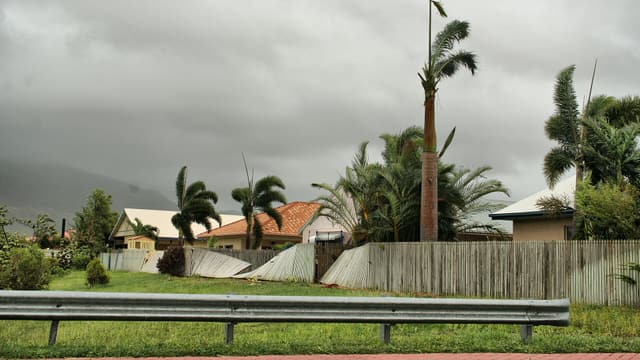
During an active monsoon the sky fills with low dark cloud, rain falls for days at a time, and fresh to strong squally winds come and go. The trough also breeds low pressure systems, which can bring flooding and, at times, tropical cyclones.
When is the wet season in northern Australia?
The Bureau of Meteorology counts the northern wet season from 1 October to 30 April, and the dry season as roughly May to September. The tropics don't have a real winter and summer the way Hobart does, so rainfall, not temperature, decides the seasons. In the far north of the Northern Territory the wet runs for about that whole October to April window. Further south and inland it generally starts later and ends earlier.
Here is what that looks like at Darwin Airport, using the Bureau's long-term averages.
| Month | Mean rainfall | Mean max | Rain days (1 mm or more) |
|---|---|---|---|
| October | 69 mm | 33.4°C | 5 |
| November | 147 mm | 33.4°C | 10 |
| December | 256 mm | 32.8°C | 14 |
| January | 432 mm | 31.8°C | 19 |
| February | 372 mm | 31.5°C | 18 |
| March | 313 mm | 32.0°C | 17 |
| April | 102 mm | 32.8°C | 7 |
| July (dry season) | 1 mm | 30.7°C | 0 |
Darwin averages about 1,730 mm a year, and almost all of it falls between November and March. Notice that the hottest days come in October and November, before the rain. Once the monsoon sets in, cloud and rain take the edge off the temperature, though the humidity stays.
The build-up: why Darwin storms are so spectacular
The months before the monsoon are called the build-up. Heat and humidity rise together, with Darwin's average overnight low sitting around 25°C in November and December. Dewy mornings give way to towering cumulus by early afternoon, and by late afternoon storms are firing.
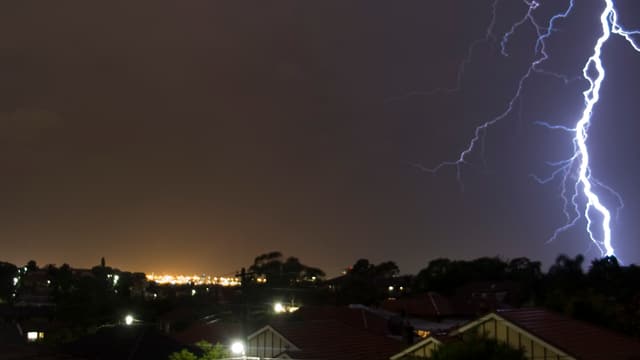
Build-up storms are the ones people photograph. They form in hot, very moist air with plenty of energy, often along sea breeze lines, and they tend to arrive late in the day when the cloud bases are lit by the setting sun. They bring brief torrential rain, strong gusts and frequent lightning, and then clear out, leaving a steamy evening. Across the harbour, the Tiwi Islands are home to a storm famous enough to have a name: Hector, a thunderstorm that builds over the islands on many afternoons through the build-up and wet season, and which pilots used as a landmark during the Second World War.
If you're in Darwin during storm season, keep the Northern Territory rain radar open. Our guide to thunderstorms and lightning covers how to stay safe when the storms roll in.
When does the monsoon arrive in Darwin?
The Bureau defines the monsoon onset by the reversal of the winds at Darwin Airport, where reliable wind records go back to the 1957–58 wet season. Measuring at one place gives a consistent record, even though monsoon-like weather can turn up elsewhere in the north without meeting the criteria at Darwin.
- Average onset: 29 December, averaged over all years since 1957.
- Latest on record: 7 February 2025. The previous latest was 25 January 1973.
- Last season (2025–26): 23 December 2025, a little earlier than average.
- Every year has one: there has been a monsoon at Darwin every year since reliable records began, and the Bureau sees no clear trend in onset dates.
A late start does not usually mean a longer wet season, but it can mean fewer monsoon bursts. On average there are about three bursts each season, with two to four active and inactive cycles, each lasting roughly four to eight weeks. The quiet spells in between, called breaks, return the weather to build-up conditions with isolated storms and squall lines.
ENSO matters here. El Niño and a positive Indian Ocean Dipole are often linked to a later onset, La Niña to an earlier one. With a strong El Niño underway in late 2026, the Bureau's northern rainfall onset outlook gave the Top End and northern and eastern Queensland a 55 to 80% chance of a later than normal start to the rains, and its December to February outlook favours below average rain across much of the tropical north. Our article on El Niño and La Niña explains why.
Indigenous seasons: Kakadu's six seasons
Two seasons is a blunt way to describe the tropics, and the people who have lived there for tens of thousands of years have far finer calendars. The Bureau hosts a number of traditional seasonal calendars in its Indigenous Weather Knowledge pages. In Kakadu, the Bininj/Mungguy Traditional Owners recognise six seasons, marked by changes in weather, plants and animals rather than fixed dates. Parks Australia gives these approximate timings:
| Season | Approximate timing | What happens |
|---|---|---|
| Kunumeleng (pre-monsoon storm season) | Mid-October to late December | Rising humidity, afternoon storms, streams start to run |
| Kudjewk (monsoon season) | December to March | Thunderstorms, heavy rain and flooding; speargrass grows over two metres |
| Bangkerreng ("knock 'em down" storm season) | April | Windy storms flatten the speargrass, floodwaters recede |
| Yekke (cooler but still humid) | May to mid-June | Morning mists, water lilies, patch burning begins |
| Wurrkeng (cold weather season) | Mid-June to mid-August | Days around 30°C, nights near 17°C, creeks stop flowing |
| Kurrung (hot dry weather) | Mid-August to mid-October | Hot and dry, thunderclouds start to build again |
Kunumeleng is the build-up by another name. Traditionally it was the time to move camp from the floodplains up to the Stone Country before the monsoon arrived.
Travelling in the wet season: roads, parks and safety
The wet is a beautiful time to see the north, but it needs more planning than a dry season trip.
- Roads close. Unsealed roads turn to mud and creek crossings flood, sometimes for weeks. In Kakadu many 4WD tracks and some sites close for the wet. The Gibb River Road in the Kimberley closes when its river crossings are impassable. Check the Kakadu Access Report, the Northern Territory road report and Main Roads WA before you go, and never drive into floodwater.
- Cyclones. Tropical cyclone season runs from November to April. Follow the warnings for the Northern Territory and the guide to tropical cyclones.
- Heat and humidity. Plan outdoor activity for early morning, carry more water than you think you need, and check the UV index, which sits at extreme levels in the tropics for much of the year.
- Crocodiles. Flooding lets saltwater crocodiles move into creeks, billabongs and waterholes well away from the coast. Obey signs and don't swim where you're unsure.
For day-to-day planning, use the Darwin forecast and the Darwin 14-day outlook, or check towns further afield such as Katherine, Broome and Cairns. If you want the full picture of the seasons around the country, see our guide to seasons in Australia.
Common questions
When does the wet season start in Darwin?
The Bureau of Meteorology counts the northern wet season from 1 October to 30 April. In practice Darwin's first storms of the build-up usually arrive from October, rain becomes more reliable in November and December, and the monsoon proper normally sets in around late December. January is the wettest month, averaging 432 mm at Darwin Airport.
Is it monsoon season in Australia now?
In late November 2026 the Top End is in the build-up, the pre-monsoon part of the wet season. The monsoon itself normally reaches Darwin in late December. With a strong El Niño underway, the Bureau's outlook favours a later than normal rainfall onset for the Top End and northern Queensland this season, so the build-up may drag on.
What is the difference between the wet season and the monsoon?
The wet season is the whole rainy half of the year in the tropics, 1 October to 30 April. The monsoon is a particular weather pattern within it: the winds swing from dry south-easterly trades to moist north-westerlies and bring days of widespread heavy rain. A wet season usually has two to four active monsoon bursts separated by breaks with isolated storms.
Can a monsoon bring a cyclone?
Yes. The monsoon trough often spawns tropical lows, and some of those develop into tropical cyclones. Australia's cyclone season runs alongside the wet season, from November to April. When a low is forming, check the warnings for the Northern Territory and our guide to tropical cyclones.
Is the wet season a bad time to visit Darwin and Kakadu?
It depends what you want. Waterfalls are at full roar, the country is green and the storms are spectacular, and scenic flights show the floodplains at their best. The catch is heat, humidity, flooded roads and closures: many of Kakadu's 4WD tracks and some popular sites shut during the wet. Check the Kakadu Access Report and the NT road report before driving.